
UK Banks Flooded With Crypto User Complaints, Led by Lloyds and Barclays

Key Takeaways
- U.K. crypto asset users filed more than 10,000 bank restriction complaints in three months, with Lloyds, Barclays, and NatWest leading the list.
- Some banks cap crypto transfers, while others ban them outright or lack clear policies.
- Stand With Crypto urges banks to adopt case-by-case controls and regulators to clarify their obligations.
Earlier this year, Stand With Crypto in the UK (SWC), a British crypto asset lobby group, gave bitcoin and other cryptocurrency users a tool to file complaints against their banks for blocking or limiting money transfers to U.K.-registered crypto asset platforms.
More Than 10,000 Complaints in 90 Days
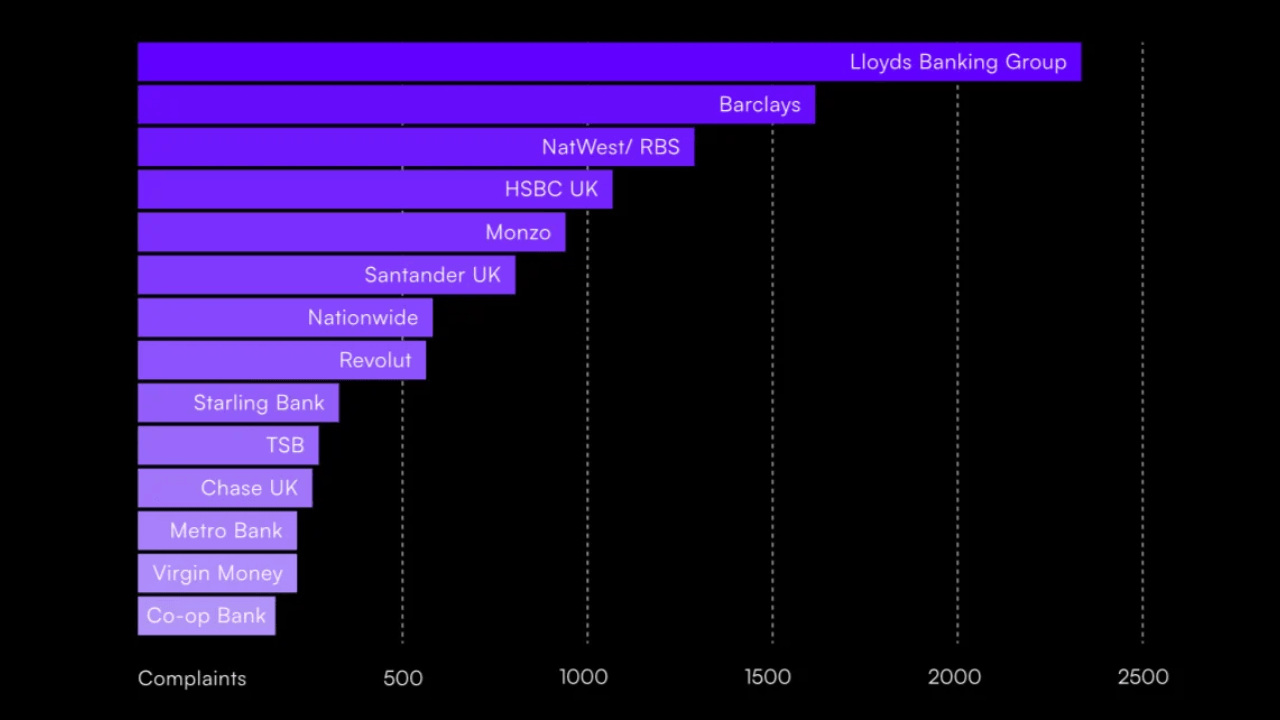
According to SWC, 9,803 individuals filed more than 10,000 complaints between May and August 2026. Lloyds Banking Group received the most complaints, at 2,297. Barclays ranked second with 1,569 complaints, while NatWest Group, which includes the Royal Bank of Scotland, ranked third with 1,278.
These are among the U.K.’s largest banking groups, with some of the biggest customer bases, which could explain why they received the most complaints.
Meanwhile, Virgin Money received 103 complaints and The Co-operative Bank received 76, accounting for about 1% each of the total. However, this doesn’t mean they are the U.K.’s most crypto-friendly banks, as both prohibit crypto asset transfers altogether.
Even Revolut, which offers its clients various crypto asset-related features, received more than 500 complaints.
Crypto Ban, Transfer Caps, or No Policy
During the campaign, people could select their bank and the type of restriction they faced, while also adding details about their specific situation.
It’s unclear how the complaints were resolved, as banks dealt with customers directly.
“But advocates have come back to Stand With Crypto and told them about their journeys, so we do know that banks have engaged with them on this,” SWC told Bitcoin.com News.
The organization also identified three approaches to crypto asset transfers among U.K. banks: blocking all transfers, imposing limits, or not stating a policy at all, as Revolut and Lloyds do. For example, Barclays and HSBC U.K. allow £2,500 per transaction and £10,000 per 30 days, while Monzo caps transfers at £5,000 per 30 days.
Case-by-Case Controls and More Clarity
The report has some caveats. For example, it doesn’t account for differences in bank size or explain why individual transfers were blocked. Still, it indicates that thousands of crypto asset users in the U.K. struggle with transfers to regulated platforms.
As SWC emphasized, published policies offer no guarantees, as banks can still block or delay transfers. This limits customers’ ability to switch to a more crypto-friendly bank.
“Consumer choice cannot operate effectively when consumers do not know what they are choosing between,” the lobby group, which counts crypto giants Coinbase, Gemini, and Blockchain.com among its partners, said.
The organization called on banks to adopt “risk-sensitive, case-by-case controls instead of blanket sectoral blocks,” and urged the Financial Conduct Authority and the Treasury to “clarify that sector-wide blocks are not a proportionate interpretation of regulatory obligations.”
Systemic Discrimination
Another report highlighted the systemic nature of banking restrictions in the U.K. In January 2026, the UK Cryptoasset Business Council said that, according to its survey, 40% of transactions to crypto exchanges are either blocked or delayed by banks.
As reported in July, British lawmakers began investigating whether banks were imposing excessive restrictions on crypto asset businesses. In August, they asked major banks whether the country’s incoming crypto framework would change how they treat regulated crypto asset firms.
The SWC report follows a U.S. Office of the Comptroller of the Currency report that found nine major American banks had policies that could restrict financial services based on political beliefs, religious affiliations or lawful business activities. The crypto asset industry was also affected.